We've all been there: the disappointment of a 'top-rated' restaurant that just... doesn't deliver. Food review apps are too general—they can't account for personal taste. That's the gap Nomi fills.

Nomi 糯觅
Knows your taste better than your partner
比你对象还懂你的口味
比你对象还懂你的口味
Background
Designs
Home page
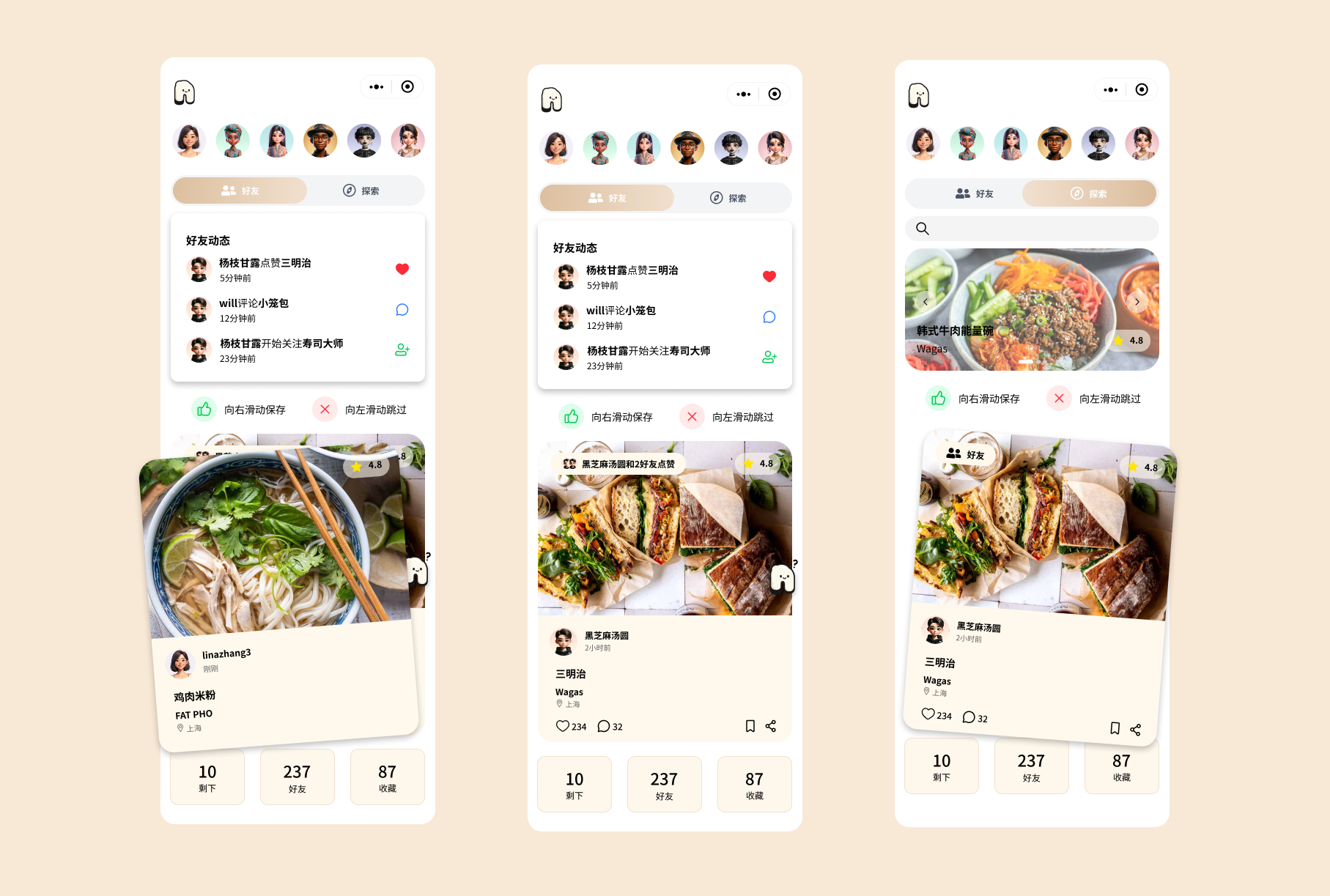
Unified Discovery Experience: The home page also acts as a discovery hub, allowing users to see both friend activity and general content from one screen. This dual-purpose design eliminates the need for constant navigation between separate feeds, creating a seamless browsing experience. This two-screen flow demonstrates a social-first approach to food discovery that combats the ad-saturated, untrusted content common in Chinese foodie apps. By foregrounding friend activity and user-generated content, the design builds trust through social proof.
The Tinder-style swipe mechanism gamifies content curation, making it easy for users to quickly save or skip recommendations. The activity feed builds trust through transparency—users see exactly what their friends are engaging with in real-time. The consistent rating system and location tags provide essential decision-making information at a glance. This integration of social signals within the explore feed (via "好友" tags) ensures users always know when content comes from trusted sources, even when browsing beyond their immediate network. This creates a trust gradient rather than a hard separation between "friend" and "stranger" content.
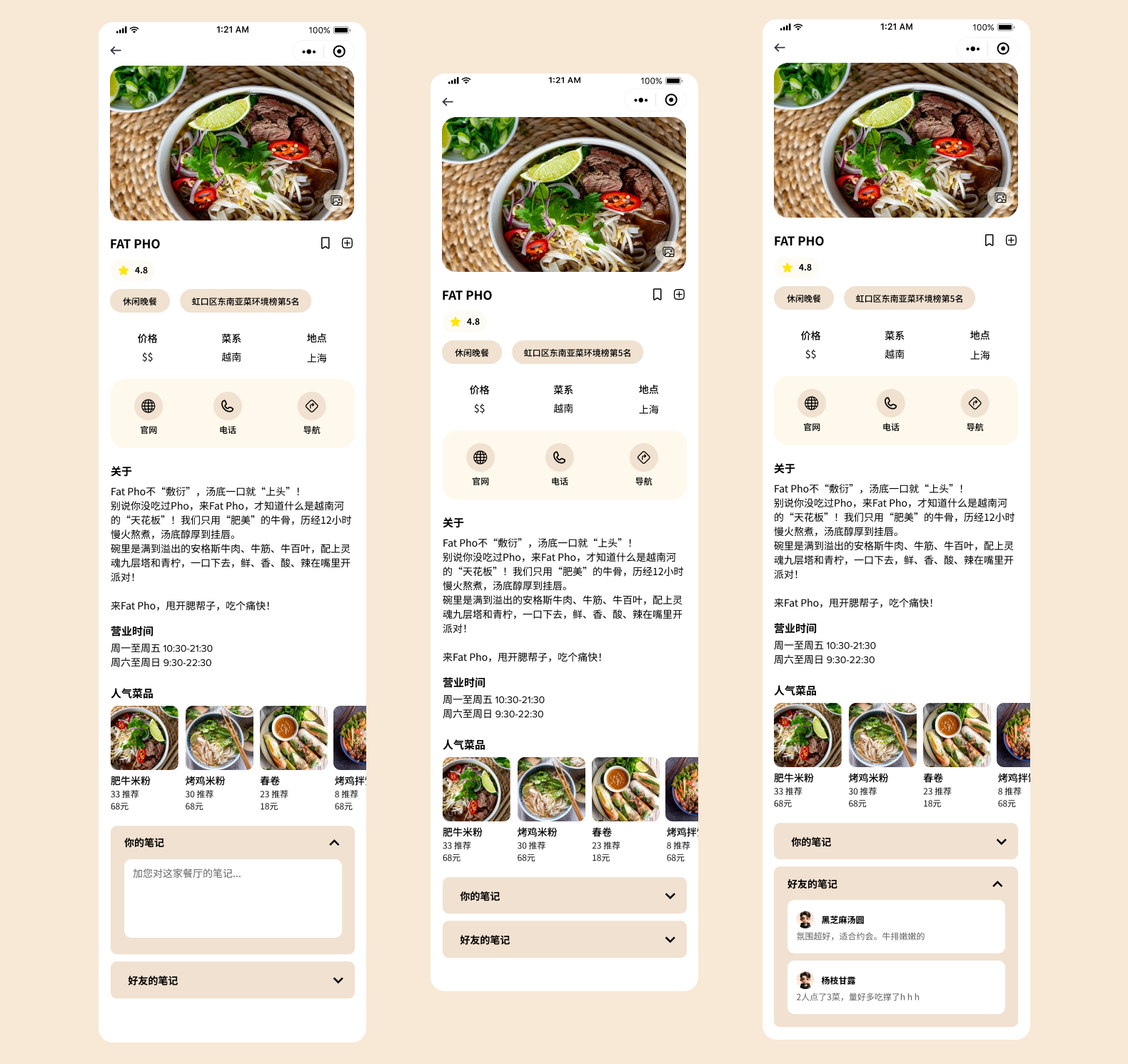
The expanded personal notes section prioritizes user-generated content creation, encouraging diners to document their experiences immediately after visiting. The prominent placement above friends' notes signals that personal reflections are valued equally alongside social recommendations. These screens demonstrate a layered approach to restaurant discovery that prioritizes genuine user experiences over commercial content. By giving equal visual weight to personal notes and friends' reviews, the design encourages honest documentation and creates a reliable knowledge base.
My lists
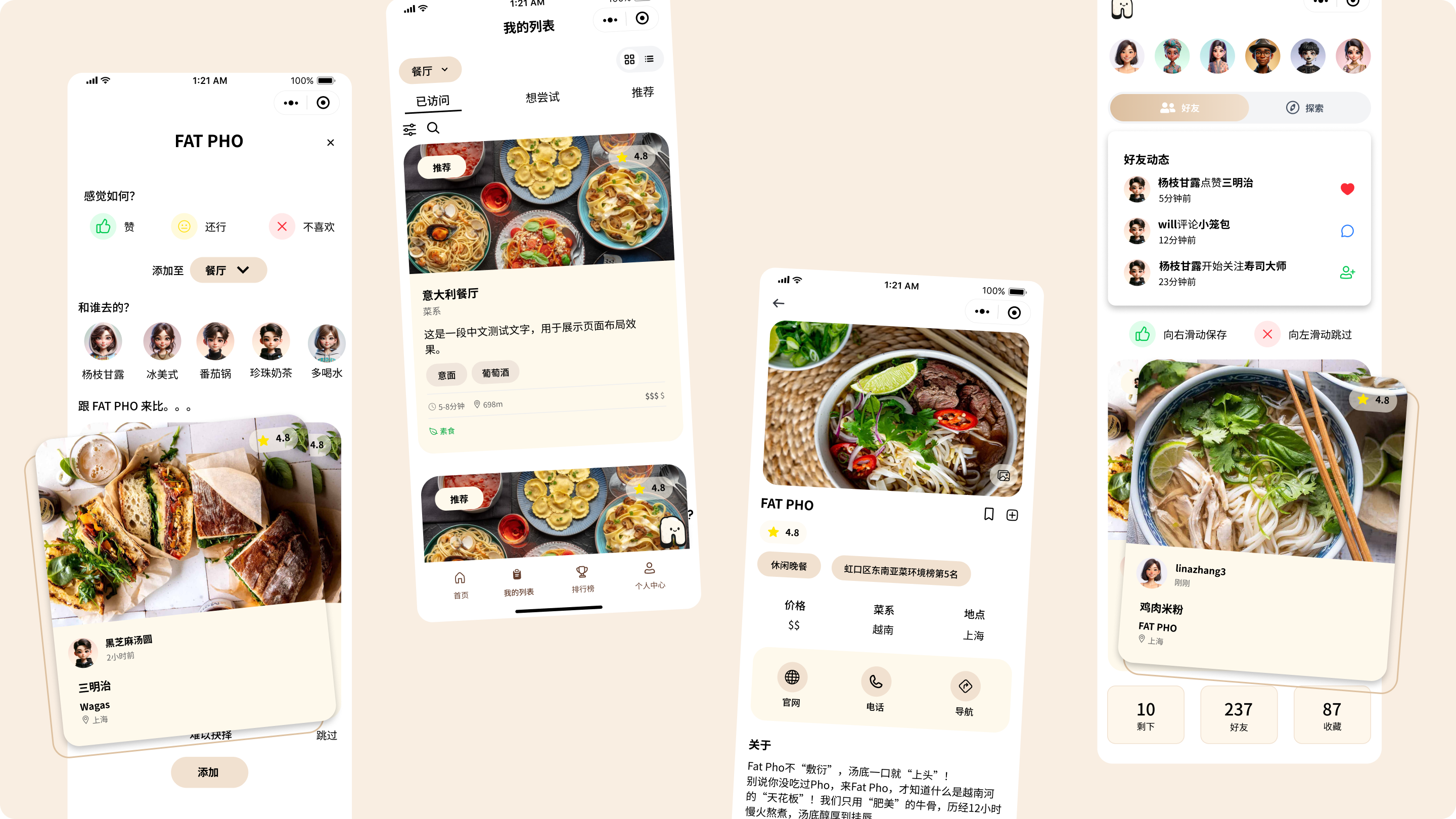
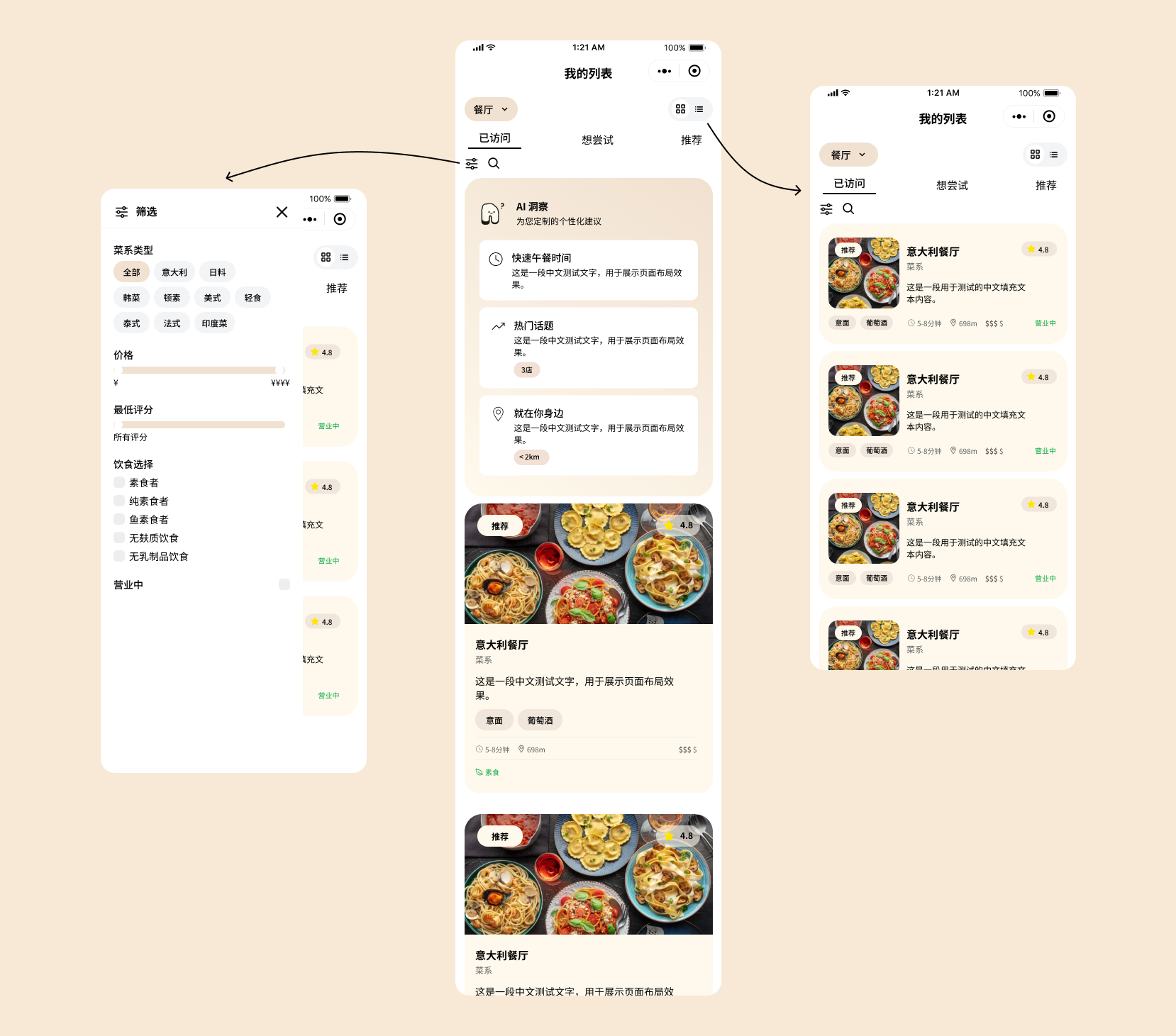
Progressive Filtering: The three-screens demonstrates a layered approach to restaurant discovery:Deep Filtering: Granular control for specific needs (dietary restrictions, price range, ratings)Smart Sorting: AI-powered contextual recommendations (quick lunch, trending spots)Refined Results: Clean presentation of filtered options with actionable informationBalancing Control and Convenience: The design acknowledges that different users have different discovery styles. Power users can set precise parameters through the advanced filter panel, while casual users can rely on AI suggestions like "Quick Lunch Time" or "Hot Topics."
Once dined
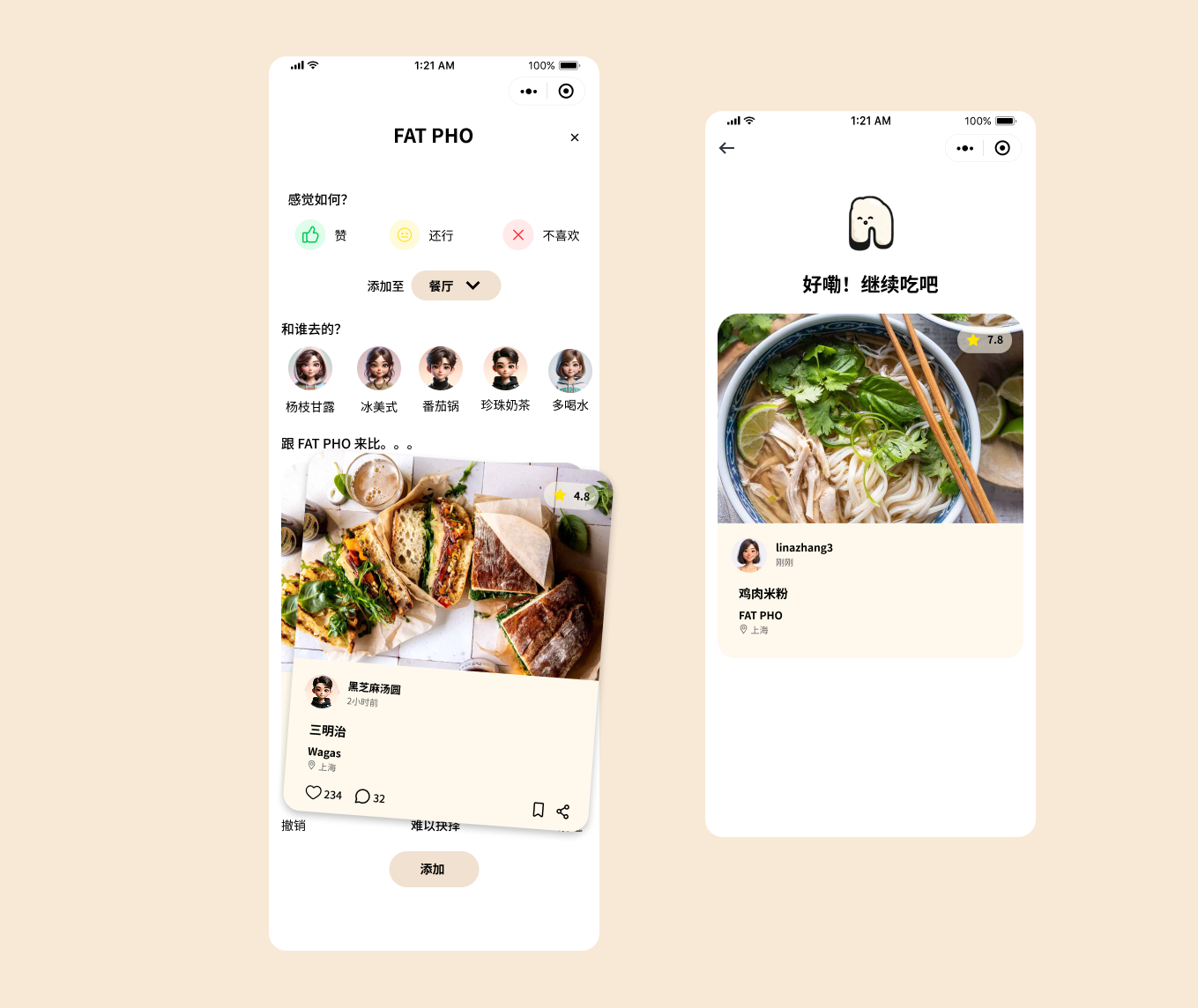
After the user has dined, they are able to add a post for the establishment, with the options to rate it good, ok, or bad. The main interaction of this screen is following the home page of swiping, but now it is a "this or that" game. Using the users previously dined, the system presents this comparison in order to generate a rating that truly reflects their tastebuds. This way the rating is more personal towards the user and not just a generic number since everyone has different tastes.
Profile and leaderboard
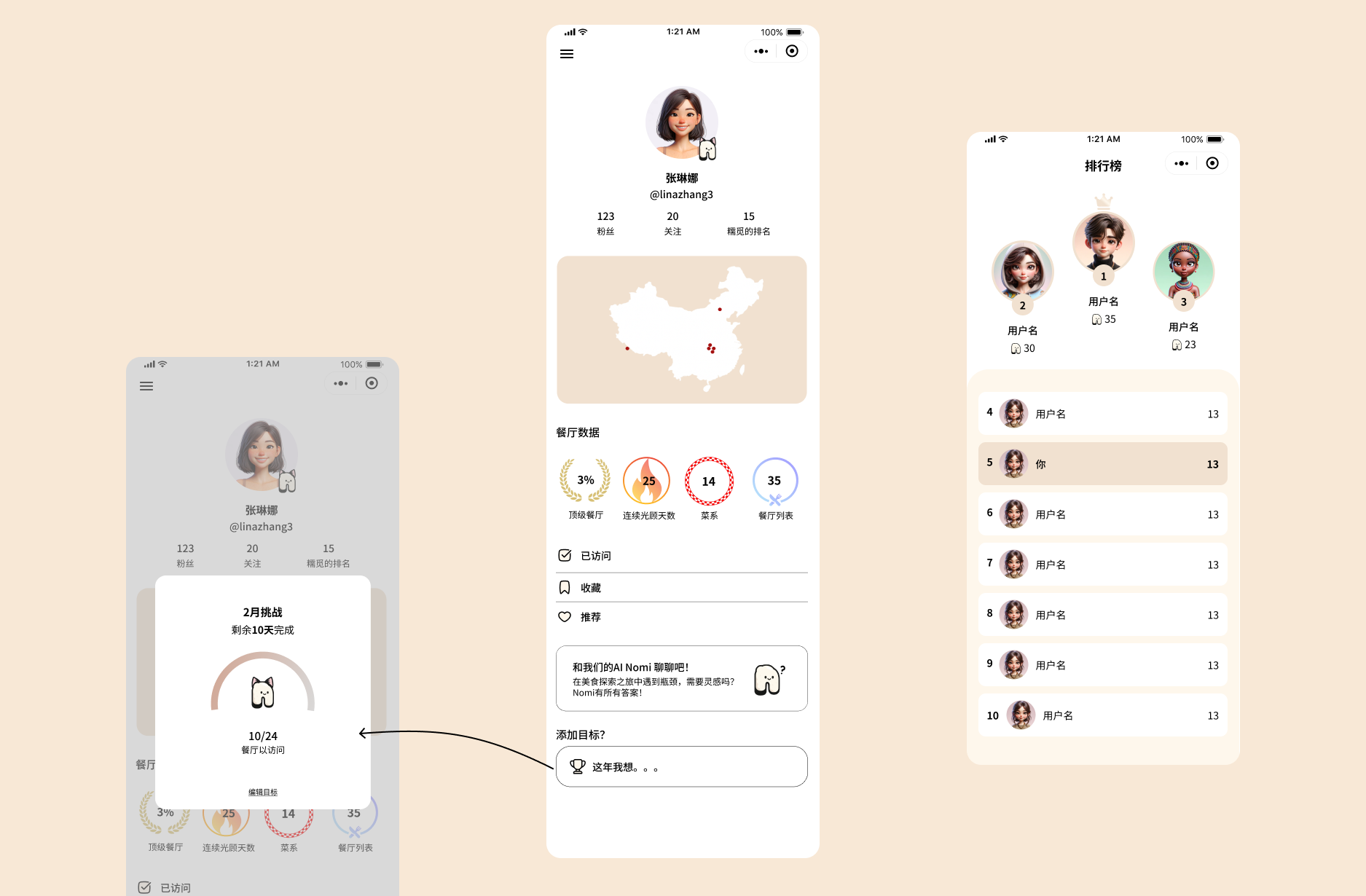
The general profile of the user displays a map of places visited, which creates a more emotional attachment to the platform and interacting with it. The monthly challenge creates a gamification loop that encourages exploration—users are motivated to visit new restaurants to complete the x-restaurant goal. The circular stats badges visualize dining diversity in an engaging, achievement-oriented way. Following this is the leaderboard, which fosters friendly competition and community engagement through social gamification. Unlike ad-driven platforms where engagement metrics might be inflated, these gamification elements are tied to authentic actions (actually visiting restaurants, trying new cuisines). The "已访问" (Visited) checkmark system creates accountability—users can't fake their way up the leaderboard.
Nomi AI
What's the hardest question out there, not just for foodies?
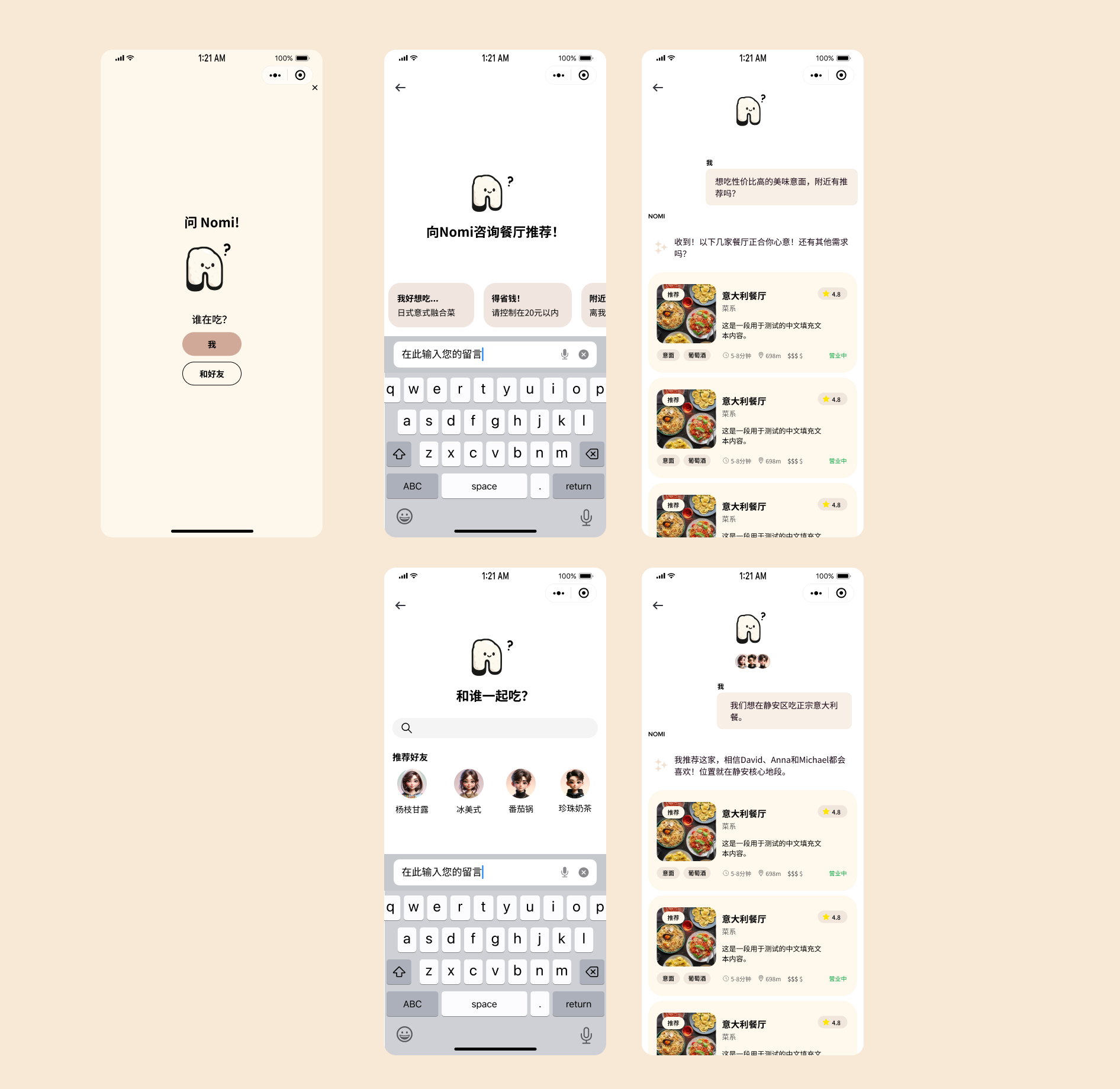
That's right, "What do you want to eat?" To help with this decision paralysis and fatigue, Nomi AI is incorporated into the system, where you are able to tell it what you want and they recommend based off of who you want to eat with and what you want to eat. When making group recommendations, Nomi explicitly states whose preferences were considered ("David, Anna, and Michael will all like it"). This transparency builds trust in the AI's reasoning rather than presenting recommendations as black-box outputs.